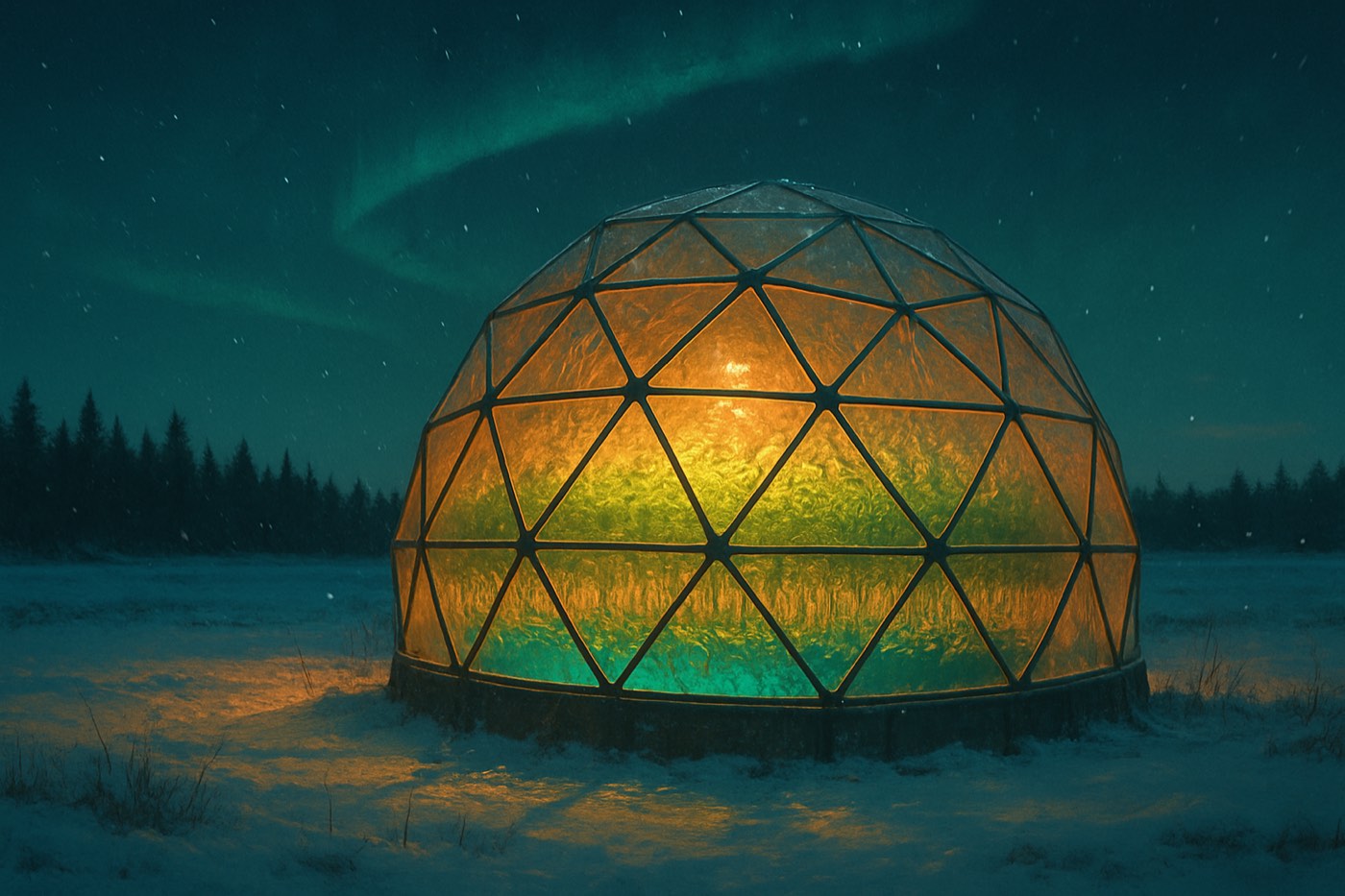
Grow a living greenhouse.
Through a Canadian winter.

Stock the fish. Plant the beds. Keep the flock. Then run the clock — and try to hold a fragile, breathing ecosystem together through a real Ontario January.

// the dome above is live — one simulated tank, ticking in real time

Main Tank · Hamilton, ON
Diss. O₂
6.4 mg/L
pH
6.8
Water °C
21.6
Nitrate
88 mg/L
How it plays

Build it in October. Answer for it in February.

Every run of Veegy is one year in one dome — a greenhouse you design, stock, and then have to carry through all four seasons. The enemy is the weather. The stakes are an ecosystem you assembled yourself.

Planning the layout inside an empty greenhouse dome 01 Design

Lay out your dome

Pick your town and the game loads its real climate — the cold, the daylight, the frost dates. Then build: the tank, the grow beds, the flock. Tilapia are forgiving but crave warmth; trout shrug at the cold and punish everything else. That one choice shapes your whole year.

A thriving greenhouse interior full of plants and fish 02 Run the clock

Live the year

Compress twelve months into an evening. Daylight shrinks, water cools, the heating bill climbs. Pause on any hour, change one thing — feed, airflow, light — and watch the whole system answer. Nothing waits for you.

A winter harvest of vegetables and fish inside the dome 03 Survive

Score it. Run it back.

Harvest weight, fish survival, seasons weathered in a row — it all counts. Then replay the exact same year with one decision changed and watch a completely different spring arrive.

Nothing is scripted. Everything is connected.

Beneath the scene, one continuously simulated ecosystem is doing the work — water chemistry, oxygen, growth, appetite — every tick of the clock. You don't manage bars. You keep a loop alive.

The nitrogen cycle

An invisible workforce

Your fish quietly poison their own water. Colonies of bacteria turn that poison into plant food, and the plants hand clean water back to the fish. Feed the loop and it hums. Chill it, starve it, or shock it — and the collapse begins somewhere you weren't looking.

Dissolved oxygen

A knife's edge, in water

Warm water holds less oxygen — real physics, and the game's sharpest blade. A hot July afternoon, one generous scoop of feed, a pump that fails at 2 a.m. Oxygen can crash in minutes, and the fish feel it first.

The central tension

Fish versus plants

The fish want one kind of water; the plants want another. Every degree, every pH nudge, every dose that helps one side leans on the other. You never solve this tension. You learn to ride it — and that's the game.

Pick your town

The seasons are the difficulty.

Choose where you live and Veegy loads that place's real climate — the monthly cold, the daylight, the sun that barely clears the treeline in December. Toronto, Ottawa, and Hamilton at first, then coast to coast. The calendar isn't decoration; it decides what you can grow and what's trying to kill it.

The greenhouse dome glowing on a snowy winter night
Dec — Feb

Deep Winter

-15°C ↓ · 9 h light

Hard mode. The heater never sleeps, and nine-hour days starve the canopy — pay for grow lights or watch everything stall. One cracked pane and the frost is inside.

The greenhouse dome on a thawing spring morning
Mar — May

Spring Ramp

3 → 19°C · rising

The sweet spot opens: cheap heat, lengthening days, the water finally settling into rhythm. Stagger your plantings now and the summer harvest compounds.

The greenhouse dome in a lush green summer field
Jun — Aug

High Summer

27°C ↑ · 15 h light

Heat flips the risk. Warm water holds less oxygen — a pump hiccup becomes a crash in minutes. Greens bolt above 33°C; vent and shade or lose them.

The greenhouse dome in an amber autumn field
Sep — Nov

Harvest & Hold

22 → 2°C · falling

Bring in the fruiting crops before first frost, then decide: overwinter the hardy greens under cover, or harvest the fish before heating season returns.

The early warning

It warns you about the future, not the past.

Alarms fire after something breaks. Veegy runs your greenhouse hours into the future instead — so it can tell you a crash is coming while there's still time to stop it, and name the one factor holding a bed back right now.

Ask the agronomist

When a plant stalls, your in-game agronomist tells you why in plain words — not a stat dump, a diagnosis. She always knows what every bed is getting, and exactly what it wants.

Your agronomist"Your basil is sitting at 38% of its potential. The bottleneck is oxygen at the roots — 4.2 where it wants 7. More nutrients won't help. More light won't help. Turn on the air stone."

DO ≥ 5 mg/L pH 6.0–7.0 Tilapia 31–36°C Trout 13–18°C Nitrate 20–150
Dissolved O₂ · 12 h forecast 6.4 mg/L
5.0 mg/L · fish stress ~6 h now +12 h

Projected: oxygen drops below 5 mg/L in ~6 hours — a warm afternoon meeting yesterday's new fish. Start the second aerator now and the line bends back. Wait past dinner, and the crash is locked in.

Own the real thing?

Hook your greenhouse's sensors up to Veegy and the dome on your screen becomes a mirror of the one in your yard — same readouts, same 12-hour forecasts, same agronomist, keeping watch over actual fish while you sleep.

The season ahead.

Early access opens with a full Ontario year. Here's what's growing:

New regions, coast to coast

Victoria's gentle winters, Prairie cold snaps, Yellowknife's four-hour December days — every town a different year.

Cold-water fish

Trout and Arctic char for northern runs — fussier about everything except the cold.

Live weather

Your town's real forecast becomes the game's forecast. If freezing rain is coming Thursday, it's coming for your dome too.

A bigger barnyard

Quail, bees for the pollinator beds — and a greenhouse cat who contributes nothing and is staying.

Can you keep it alive?

Leave an address and be first through the door when the season opens. First frost isn't waiting.